A chapter of my novel has been shortlisted for The Masters Review’s Novel Excerpt Contest. This is a tremendous vote of confidence as I search for an agent and publisher.
If anyone was interested in surveilling my daily habits, they might surmise that I live in New York. I subscribe to the New York Times and The New Yorker. I get my day started with the “Brian Lehrer Show” on WNYC and usually drink my coffee out of a mug with the radio host’s name. And if there is time, I segue into “All Of It” with Alison Stewart before turning the tuner to my local NPR station, KQED.
Digital Collection Image ID 1939249 and Jonathan Blanc/New York Public Library
(Don’t get it twisted, I am a die-hard Golden State Warriors fan and have joined the Valkyries bandwagon, but it is hard not to root for the Knicks when they’re not playing the Dubs.)
I live in the San Francisco Bay Area and haven’t had an address in New York since 1987. But even before I moved there in the early 80s I felt the city’s pull. It was a place both of my parents loved. My mother, a native of Newark, New Jersey, shared fond memories of day trips into Manhattan. My father had spent his young adulthood and the bulk of his career as a journalist in Harlem. In my mind, New York has always been a place of wonder.
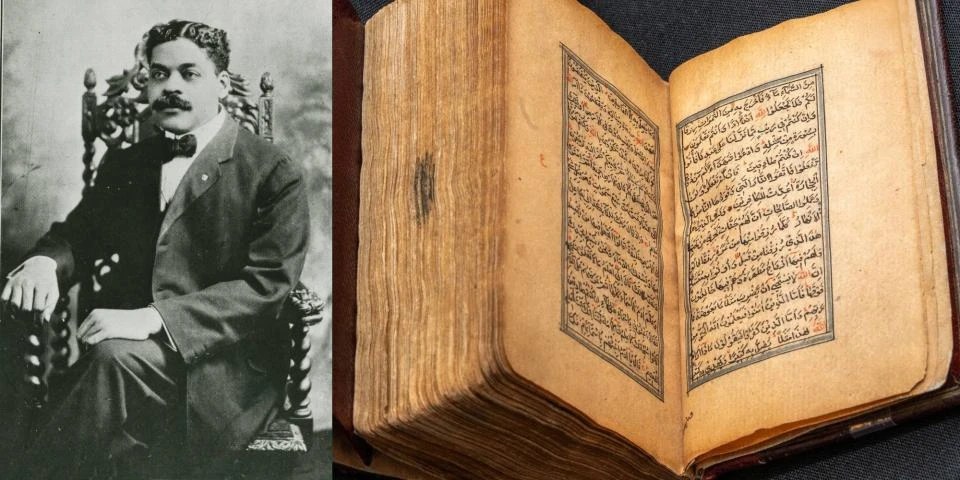
So, it would be no surprise to anyone that my first act on New Year’s Day was to tune in to the Inauguration festivities for New York Mayor Zohran Mamdani. In line with his Muslim faith, Mamdani swore to uphold the constitution by placing his hand on the Qur’an. Two of the holy books selected for the occasion belonged to his grandparents. The other was from the collection of Arturo Schomburg.
Schomburg was a Black historian born in Puerto Rico. According to Wikipedia, his mother was a freeborn Black woman from St. Croix; his father was of German descent. As a young student, Schomburg recalled an elementary school teacher declaring that Black people had no history. Schomburg, who identified as “Afroborinqueño” or Afro-Puerto Rican, devoted his life to dispelling that lie by documenting the history of the African diaspora.
Schomburg studied commercial printing at San Juan Puerto Rico’s Instituto Popular, and he studied Negro literature at St. Thomas College on the island of St. Thomas. (St. Thomas and St. Croix, where his mother was born, were occupied by the Danish until they were sold, along with St. John, to the United States in 1917.)
At the age of 17, he settled in New York, where his day jobs included teaching Spanish, working as a messenger and clerk for a law firm and eventually supervising the Caribbean and Latin Mail Sections of Bankers Trust. In the meantime, he pursued his passion of doggedly collecting and curating evidence of a rich Black culture and intellectual life from Africa and across the world. He co-founded the Negro Society for Historical Research and was a significant figure in the Harlem Renaissance.
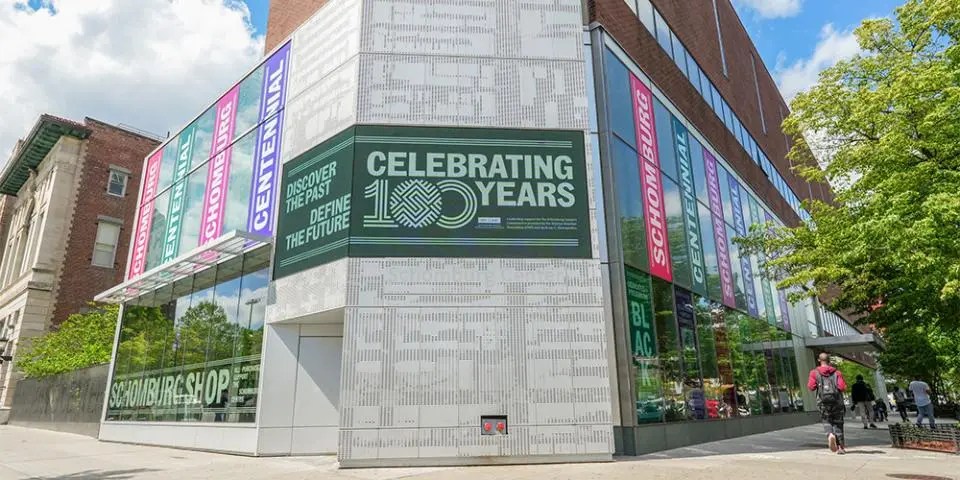
Schomburg sold his collection of art, literature, and historical artifacts to the Harlem branch of the New York Public Library. That collection would become the basis of what is now the Schomburg Center for Research in Black Culture, which currently is celebrating its 100th anniversary.
That center is where I discovered the writings of my father, which inspired this website. And I was jazzed when I read that one of the Qur’ans featured in Mamdani’s swearing-in had been loaned to him by the Schomburg.
“The Schomburg Center is honored to have an object from its holdings included in this historic moment for New York City,” Joy Bivins, the Center’s director, said in a Dec. 31 press release.
“As we celebrate 100 years of collecting, preserving, and sharing the riches of global Black culture at this singular institution, we are delighted that Mayor-elect Mamdani selected a Qur’an from our namesake’s personal collection to mark the beginning of his administration.”
“This marks a significant moment in our city’s history, and we are deeply honored that Mayor Mamdani chose to take the oath of office using one of the Library’s Qur’ans,” added Anthony W. Marx, president and CEO of The New York Public Library. “This specific Qur’an, which Arturo Schomburg preserved for the knowledge and enjoyment of all New Yorkers, symbolizes a greater story of inclusion, representation, and civic-mindedness.”
At a time when the current occupant of the White House has launched a campaign of historical erasure, it is encouraging to see the Schomburg in the spotlight.
Yesterday, I wrote about a thirty-something New Yorker with little political experience who ran for a seat on the New York State Assembly. Her name was Eunice Hunton Carter, and her 1934 campaign was ultimately unsuccessful.
Today, Zohran Mamdani, already a member of the New York State Assembly from Queens, is New York City’s Mayor Elect. And in addition to his success, Democratic candidates across the country won decisive victories.
In the governors’ races in New Jersey and Virginia, both women candidates, Mikie Sherrill and Abigail Spanberger were more moderate than Mamdani, who unapologetically identifies as a democratic socialist. He has promised to make New York more affordable by freezing the rent on rent-stabilized apartments, by providing universal child care, and by making buses free.
In his book, Invisible, Stephen L. Carter’s biography of his grandmother Eunice, he describes her 1934 election platform as “long on promises and short on the practical means for attaining them.” She pledged to ease qualifications for old-age pensions in the days before Social Security existed. She wanted to lower electric, gas and telephone rates and improve unemployment insurance.
“Familiar goals all,” Stephen Carter wrote, “yet Eunice was able to make people believe she could pull them off.”
I lived in New York for a brief six years, and left the city decades ago, but it continues to have a hold on me, as I believe it had on my father, even after he made Pittsburgh his home.
So, I, like Eunice’s supporters, was electrified by Mamdani’s campaign even from 3,000 miles away. And I am hopeful that as Mayor he has the practical skills and the talented administration necessary to attain at least some of his goals.
The swath of Tuesday’s election outcomes suggests that the Democratic Party is not one-size-fits-all and that it should continue to embrace a wide tent. May the momentum of these victories and the coalitions that made them possible help smooth even the rockiest political roads ahead.
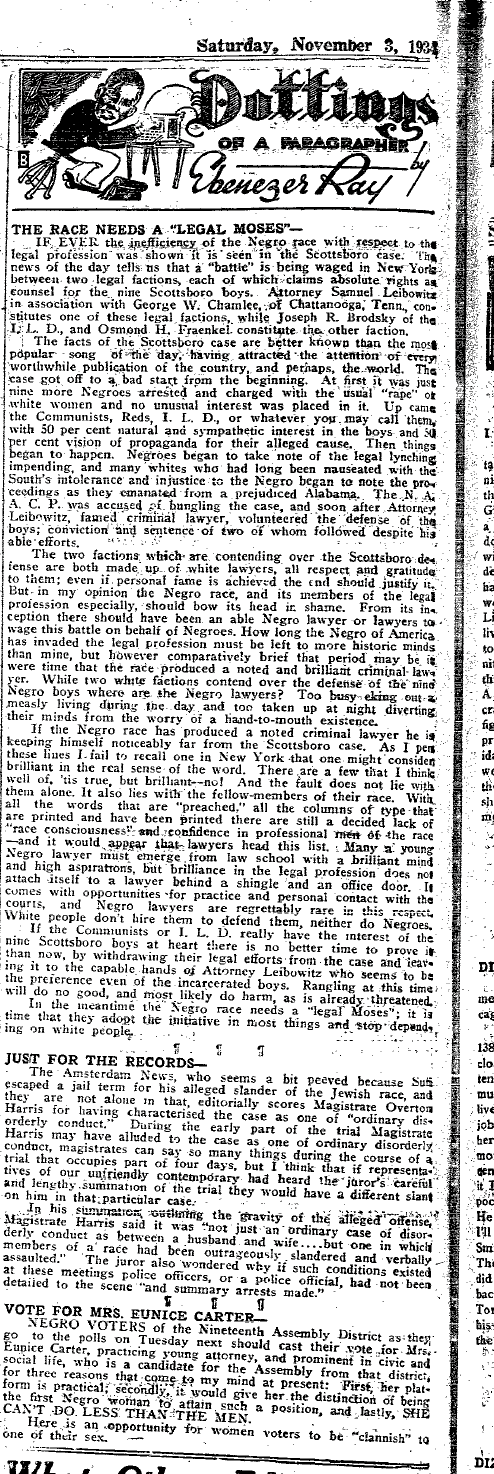
Looking for something fresh to write about on Election Day, I searched my father’s columns for wisdom from the past. A footnote in a column published in the New York Age on November 3, 1934, implored readers to elect “Mrs. Eunice Carter” to the New York State Assembly. The name had a familiar ring.
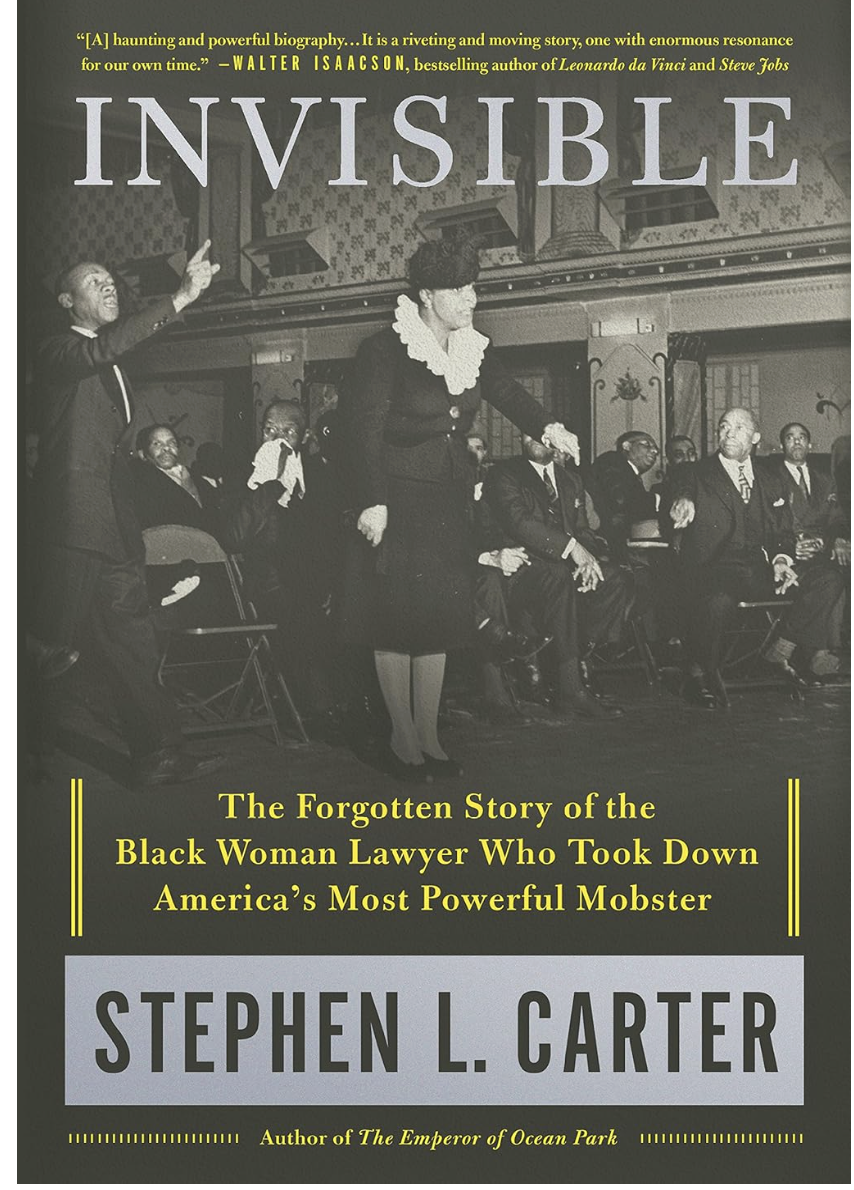
Five years ago, my cousin, Evelyn, sent me a text message with a copy of a paragraph from a book that quoted Ebenezer. The book, Invisible, by author and Yale legal scholar, Stephen L. Carter, is the biography of Stephen’s grandmother, Eunice Hunton Carter. The book’s subtitle is: “The Forgotten Story of the Black Woman Lawyer Who Took Down America’s Most Powerful Mobster.”
But before Eunice Carter became a prosecutor, developing the strategy that would bring down Mafia boss Lucky Luciano, she was picked by the Republican Party as their candidate for the Nineteenth District of the New York State Assembly. According to Stephen Carter, the GOP “needed a warm body” to run for the seat occupied by James Stephens, a Democrat and the only “colored” member of the Assembly at the time.
My father and his newspaper, The New York Age, were all in for Mrs. Carter.
“The Age, the more traditionalist of New York’s major Negro papers, labeled Eunice ‘exceptionally well qualified.’ The paper predicted ‘with certainty’ that she would win,” Stephen Carter wrote. “Age columnist Ebenezer Ray offered three reasons: ‘First, her platform is practical; secondly, it would give her the distinction of being the first Negro woman to attain such a position, and lastly, SHE CAN’T DO LESS THAN THE MEN.’ The column added: ‘Here is an opportunity for women voters to be clannish to one of their own sex.’”
Despite support from the Black press in New York and beyond and predictions that she was the “odds-on favorite,” Eunice Carter lost the election. The Baltimore Afro-American, which also had endorsed her, expressed surprise.
“The paper told readers that even as Eunice gave a conciliatory concession speech, she ‘looked as if her faith in humanity had been shaken,’” Stephen Carter wrote. “What went wrong?”
The author listed several possible reasons his grandmother lost, despite a “spirited campaign.” Her incumbent had likely benefitted from the patronage of Tammany Hall, the New York City Democratic political machine that dominated the city’s politics for decades. “In addition, although the impact would not be obvious for another decade, the segment of the community Eunice was seen to represent — tradition-bound, clannish, respectably middle-class — was losing its stranglehold on the politics of the darker nation. And, of course, at this time a substantial portion of the Negro and white electorate alike remained skeptical or perhaps even hostile toward female candidates,” Stephen Carter wrote.
I’m happy to know that my father was forward-thinking enough to champion a woman’s candidacy. Still, there are echoes of today’s political climate.
My faith in humanity was shaken when Kamala Harris lost the 2024 presidential election.
Stories of Eunice crisscrossing Harlem, inspiring crowds at churches, political clubs and civic organizations; her direct appeals to specific constituencies such as Black beauticians, took me back to Harris’ whirlwind 107 days on the campaign trail.
In Invisible, Carter added that another factor in Eunice’s defeat was that Black folks were going through a “partisan transformation.” In 1929 “African America still trended Republican. By 1934, Harlem was voting Democratic— the party won every contest in the neighborhood that year—and the same partisan tide that defeated Eunice was sweeping the darker nation in election precincts around the country.”
The 2024 presidential election exposed some partisan realignments as well, including an increased portion of Black men who voted for Harris’ opponent. And while I would not call their slight right shift a tide, it is worrisome. I also worry that the “tradition bound,” Democratic establishment might court Republicans at the expense of its progressive left flank.
I wonder what Ebenezer and Eunice would think about Harris or New York Democratic Mayoral candidate Zohran Mamdani.
The shop I go to is not the stuff of Black culture lore. It’s not a boisterous place. It doesn’t reek with toxic masculinity. It’s a nice, quiet, family friendly kind of enterprise.
The worst I have been subjected to in the nearly three years I’ve gone there is being referred to as “Ma’am,” which though appropriate at my age, still takes some getting used to. There’s also “young lady,” which is patronizing, but I shrug that off.
In the five minutes it takes to trim my undercut, I tend to stick to pleasantries: offspring; the Golden State Warriors; vacation plans.
More serious topics, like vaccines, or the evils of pork, come up, but things never get heated.
On my last visit, though, as we both lamented the number of Black women who have lost jobs since President Donald Trump reentered the White House, it was my barber who quoted the number: More than 300,000. That’s how many Black female workers left the public and private labor force between February and July of this year.
Which made what followed all the more surprising.
Trump is trouble, he said, but if Harris had been elected, “That ho would have taken my guns.”
I reminded him that Harris had insisted during her campaign for president that she is a gun owner.
“She still would have taken my guns,” he said, adding that White men would have been allowed to keep theirs.
“Not if your guns are registered and you pass a background check,” I said. I didn’t address the fact that he’d referred to Harris with the H word.
I get that not all Black folks love or even like, the former California prosecutor, Senator and Vice President. But that this Black man who has daughters of his own, referred to another Black woman in such vile terms left me speechless.
As a sorority pledge in college, my moniker was the “Little Ivy who hates to talk.” I’ve been put on the spot in book clubs and other discussion groups with a probing “What do you think, Elaine?” I had a pre-marital therapist who advised me not to edit myself so much. When I accepted a job on the editorial board of the Boston Globe, a coworker said, “I didn’t know you had opinions.”
True, I do operate on the adage that it is better to be silent and thought a fool than to speak and remove all doubt. I prefer to have my ducks in a row before stating a fact or expressing a point of view.
I get it honest. I grew up in a household in which my mother and sisters were full of chatter. My father, from whom I inherited my love for journalism and the written word, was a man of very few words. But when he had something to say, it was meaningful. I like to think I take after him. And when someone else says it better, I’m happy to yield my time.
In the aftermath of the assassination of Charlie Kirk, founder of Turning Point USA, who couched his bigotry in a veneer of open debate, several pundits, including Democrats and liberals, tripped over themselves to hail Kirk’s commitment to “open dialogue.”
Journalist and author Ta-Nehisi Coates challenged the echo chamber of gushing postmortems in a piece in Vanity Fair:
“By ignoring the rhetoric and actions of the Turning Point USA founder, pundits and politicians are sanitizing his legacy,” the intro to Coates’ article read. The essay, titled “Charlie Kirk, Redeemed: A Political Class Finds Its Lost Cause,” included a litany of Kirk’s racist, transphobic, Islamophobic, and antisemitic provocations.
Ezra Klein, New York Times columnist, author and podcaster, and one of the apologists Coates had singled out, responded: “Coates compared what I was doing there to the whitewashing of the Southern cause after the Civil War.”
So as pundits with platforms do these days, he invited Coates to join him on his podcast, the Ezra Klein Show.
“One thing for me is that in the immediate hours after somebody is murdered in public, when you see that sort of grief and horror pouring out of the people who loved him — and many people loved him — my instinct then is to just sit with them in their grief,” Klein offered in his defense.
“To say: ‘I can for this moment find some way to grieve with you, to see your friend in some version of the way you saw him.’ That’s not my view of the person’s whole legacy, but going to people when they’re grieving like that and saying: ‘Listen, I want to tell you what I really thought of your friend’ — just feels like not what you do in a community.”
“Was silence not an option?” Coates asked.
As a person of few words, that question resonated with me. In this age of the defunding public radio, the extortion of corporate media and the shameful acquiescence of social media moguls, is silence ever an option?
The most appropriate response to Charlie Kirk’s hateful speech was more speech. I certainly understand Klein’s impulse as a journalist to say something about the horror of such a public assassination, while not speaking ill of the dead.
I also believe that Coates’ essay was the appropriate response to the whitewashing of Kirk’s bigotry.
***
Back at the barbershop. I walked out of the shop before I could fully collect my thoughts.
I texted a friend. “My barber just called Kamala a ‘ho.’ Now, I’m gonna have to find someone else to cut my hair.”
That’s a challenge. A previous barber had pontificated on the Jeffrey Dahmer case: “If you are going to be gay, don’t be gay with White people,” as if Dahmer’s Black victims somehow deserved their gruesome fates. I don’t remember how we ended up on that subject, but I couldn’t get out of that chair fast enough.
I’ve thought about going back to my barber and simply telling him that he offended me. “Young man,” I could ask, “What gave you the impression that you could look at me and show that kind of disrespect toward another Black woman?”
Or is silence the best option?
Sometimes it is, usually it’s not.
Did my barber have a right to call Vice President Harris out of her name?
Sure. But I have a right to not let him touch my hair.
Looking for something fresh to write about on Election Day, I searched my father’s columns for wisdom from the past. A footnote in a column published in the New York Age on November 3, 1934, implored readers to elect “Mrs. Eunice Carter” to the New York State Assembly. The name had a familiar ring. Five […]
My barber called Kamala Harris a “ho.” The shop I go to is not the stuff of Black culture lore. It’s not a boisterous place. It doesn’t reek with toxic masculinity. It’s a nice, quiet, family friendly kind of enterprise. The worst I have been subjected to in the nearly three years I’ve gone there […]
On Saturday, Feb. 17, I will be among several individuals inducted into the 2024 Class of the Black Legends of Silicon Valley. This is quite an honor. Previous recipients in the News and Documentary category in which I am being honored include journalists with stellar credentials. Loretta Green, an award-winning reporter for several local papers […]



 My Father's Posts